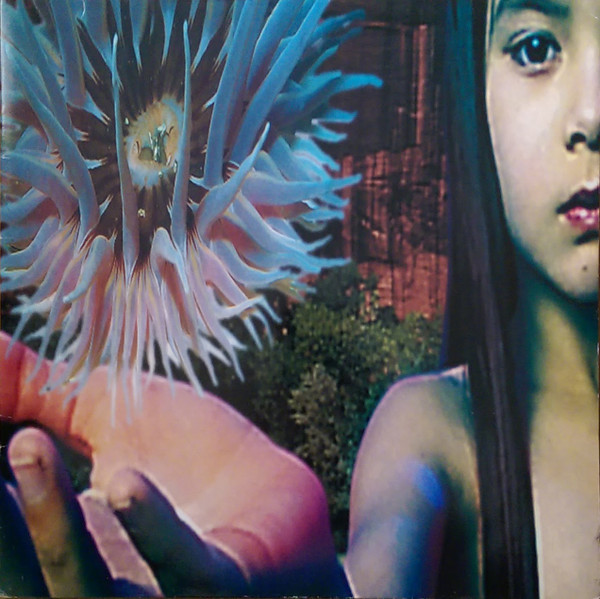
Lifeforms – Future Sound Of London – Released 23rd May 1994, Virgin Records
Lifeforms is a classic album by electronic music pioneers Future Sound of London released on Virgin Records in the summer of 1994.
Future Sound of London (or FSOL for short) consist of Garry Cobain and Brian Dougans, who met in Manchester during the acid house scene and bonded over similar interests and musical influences.
Dougans already had a hit as Humanoid, with the 1989 classic Stakker Humanoid, widely considered to be one of the greatest acid house tracks of all time.
As Future Sound of London, the duo had another big hit, 1991’s unforgettable ambient/breakbeat crossover, Papua New Guinea.
This remains the duo’s best known and best-loved track and paved the way for their 1992 debut album, Accelerator.
FSOL also released music under other aliases, such as Amorphous Androgynous, releasing the album Tales Of Ephidrina in 1993.
With its copious use of psychedelic synth effects, new age ambience, rich percussive textures and jungle sounds, not to mention all those Predator samples, I’ve always viewed that release as a sort of prelude, or dress rehearsal, for Lifeforms.
The only difference being, while Ephidrina still clings to the more structured trappings of club music, Lifeforms mostly jettisons such rhythmic constraints allowing the music to go much deeper.
The result is one of the most original and engaging albums of all time with prolonged bouts of freeform ambience, punctuated by mutant percussion, competing melodies and irregularly jarring time signatures.
Now, just warning you in advance, the one word you’re invariably going to hear again and again throughout this review is “dense”. This album is DENSE.
No mere shallow petri dish, Lifeforms is a swarming primordial audio jungle. And after three decades of macheting through its dense canopy, I still feel as though my ears have yet to uncover but a fraction of all its secrets.
The multifarious chittering strata of FSOL’s alien lifeforms range from shrill, acid-spitting xenomorphs to hyper-modulated low frequency extremophiles and everything in between. An entire ecosystem of erratic sonic mutations all vying for dominance. But no sooner than one sound emerges victorious, another, even stranger sound comes along to knock it from its perch.

It’s no exaggeration to state that Lifeforms features some of the broadest sonic strokes of any album I’ve ever heard, not to mention some of the deepest cuts in sampling history.
There’s Kraftwerk and krautrock, like Tangerine Dream, Klaus Schulze and Robert Fripp, alongside avant-garde composers like Isao Tomita and proto-industrial noise merchants Throbbing Gristle.
These older influences rub up against crusty contemporaries like Ozric Tentacles, scifi and fantasy movie sounds, Bladerunner noir, Floydian slips, BBC Radiophonics, NASA launch dialogue, acid house, hiphop, electro, Detroit techno, stacks of new age sample CDs full of windchimes and woodblocks, wibbles, wobbles, occasional synth squabbles and a shit ton of shakuhachis.
This is indeed the sound of a future cyberpunk London, rippling with neon drizzle, dark, sprawling Vangelian cityscapes, holographic Geisha Gherkins, bass pulsing hovercar Cosworths blasting out pirate radio breakbeats and low frequencies, all emanating from sketchy tower blocks as tall as the Tyrell Corp HQ.
The customary response to such descriptions is, “eh?”
Since attempting to put this album into words makes this perhaps my most challenging article yet, but my love for it dictates that I try.
Three decades now and counting – it’s still sounds well futuristic bruv.
Yeah ok, so my first attempt was a bit too arty farty, but my second one definitely nailed it.
Lifeforms – Disc 1
Lifeforms opens with heartbeat kickdrums, oriental instrumentation and isolated guitar twangs before the main track coalesces with extra-terrestrial operatics,
augmented by soothing pads, gamelan bells and bass-heavy beats.
And when the main rhythm kicks in the payoff heavenly.
Less that 3 minutes in and this 30-year-old album still sounds like the future.
Incidentally, the opening track is called Cascade and was the album’s first single, the full EP of which, is a masterpiece in and of itself.
Ill Flower is a densely textured piece of beatless ambience with an epic chord sequence worthy of peak Pink Floyd.
It merges into Flak, which has more of a techno feel. A steady groove permeates throughout, consisting of a looping drone combined with Zen woodblocks, while more pads and layers of ambience wash over it like soothing waves.
Bird Wings is a short intermittent piece, less a piece of music and more just a sequence of retro sounding computer bloops and heavily reverberated textures.
Whereas Dead Skin Cells, though far from the prettiest of names, is a gorgeous sounding track.
Note the juxtaposition between the main piano melody and the actual beat that underpins it.
Musically, or technically might be a more accurate term, this track shouldn’t work, yet somehow it does. Despite consisting of two incongruent time signatures the contrast between the two halves elevates the whole, making this stand out as one of the album highlights for me.
It also encapsulates the album’s overall aesthetic which I mentioned earlier, of an evolutionary arms race between various competing melodies, beats and fleeting snippets of polyrhythmic percussion.
And so we get to the title track, Lifeforms, a more upbeat techno-inspired piece with a (relatively) steady 4/4 beat, over which we’re treated to intricate percussion, tribal chanting and Floydian synths.
Given its more traditional, dance-friendly structure, it should be no surprise to learn that this was selected as the album’s second single.
(As always, the corresponding EP was like a mini-album in its own right, featuring multiple variants of the track. The EP also featured the Cocteau Twins’ Liz Frazer, who would later collaborate with Massive Attack on the song Teardrop.)
Eggshell comes on strong with those trippy neo-Tokyo vibes before the onset of Crazy Diamond-esque synth chords and an accompanying marimba melody. These two elements form the basis of the track, over which various synths and bubbling basslines vie for our attention.
Among Myselves is the final track of disc 1, we hear the sound of running water and a voice speaking, “I can hear myself”, “I think I’m a bit afraid”, “they were drowning me.”
Which they were, in oceans of reverb and delay as it turns out.
More strange alien sounds, growing louder, while the distant laughter adds to the psychedelic paranoia.
No doubt the duo were fully cognizant of the effects such exotic soundscapes could have on lysergically-attuned minds, as an bright melody finally shines through the fog like sunshine, raising us up into its warm embrace.
While underneath a slow dub-like rhythm and more growing textures, synth effects and snippets of NASA dialogue.

Lifeforms – Disc 2
Disc two begins with the track Domain, essentially a synthesiser version of Pachelbel’s Canon In D Major as played the on wind-battered surface of Antarctica as wind chimes tinkle, waves lap the jagged ice and distant voices chatter.
Next up is Spineless Jelly, one of the more common lifeforms currently now that we’re in election season, but I digress…
The track begins with a steady pulsing synth arpeggio further augmented by minimalist melodies before a mutant electro beat rises from the surface.
Track three, The Interstat, announces its arrival quite abruptly though, 30 years on, I’ve still no idea what an Interstat is. Still, no time to dwell on it since we only get a minute of it before it’s time for Vertical Pig.
Not sure how this sonic pallet differentiates from a horizontal pig, but its a track which starts off relatively benign before taking an abrupt tonal 180.
Incidentally kudos to FSOL for being probably the only producers in history who can use a shakuhachi sample and not make it sound like some cheesy new age Enigma shite.
As distant helicopters come rumbling in the track grows suddenly darker and begins its paranoid descent into a murky cyberpunk hell. It’s cinematic, psychedelic and futuristic, like tripping balls in the Neuromancer Sprawl.
Maybe if you turned the pig sideways it might be a bit cheerier.
Vertical Pig eventually collapses into a single industrial drone before merging with Cerebral, which features more Asian-sounding woodwinds – a motif which this album rarely strays from – followed by a notably sunnier guitar loop collage with strong Steve Reich overtones.
This, in turn, mutates into Life Form Ends, a teaming jungle of sound warmed by a rising choral pad chord sequence and further nourished by exotic percussive textures.
The result is an enthralling tug of war between freeform ambience and the breakbeat-driven tribal techno of their best-known early hit, Papua New Guinea.
But just when you think it’s starting to coalesce into the latter, the track goes off on another unexpected tangent with an orphaned 303 bassline flailing wildly as though attempting to grab purchase on a non-existent beat.
VIT begins with many of the same sounds we’ve come to expect, twittering creatures, strange clicking in the undergrowth, running water, passing aircraft, disjointed human voices and portentous acid basslines.
Next, we get a fat distorted bass drum with trails of feedback, leading into a more intricate breakbeat. Finally, something we can nod along to once more.
This groove is topped with further tribal flourishes, jittering percussion and skyward whirling arpeggios.
VIT ends on what sounds like some strange snoring creature before we arrive at Omnipresence, a track which once again which comes in hard with those erupting smokestack Bladerunner vibes and corresponding starbursts of Nippon-cyberpunk neon.
This is another highlight for me, the interpolated percussion, the layers of melodies which ride it, the spacey lead synth and that delicious delay keys and chord combo which serves as its centrepiece.
30 years on I’m still listening to those beats and going, “how did they do that?”
A masterpiece. A subtle and subdued one, sure, but a masterpiece none the less.
Room 208 is another textbook FSOL track, in that there’s no way of knowing for sure when and where the track begins or ends.
Which was always even more confusing since I mostly had this in my Walkman back in the day, so I still can’t tell you where one track ends and the next begins without looking carefully.
But that’s always been an aesthetic choice with FSOL, lots of different sounds and vibes all merging into one.
First, about a minute of just ambient noises and human chanting, then some synth chords and a momentary lapse of chanting supplemented with Floydian guitars, but that’s not the start either, because just when we think we have a grip on things we get a new motif, a steady beat and a bass/lead combo that now forms the main track, we only had to wait two minutes and several false starts to get here.
After four and a half minutes the track mutates into something new once more, an Oriental arpeggio takes hold and suddenly this piece takes on a whole new significance.
Elaborate Burn is another short piece, again consisting of various musical motifs all vying for our attention, though ultimately none of them come out on top and our attention is instead drawn elsewhere, in this case towards the finale track, Little Brother…
This is another damp techno squib, in that it feels like it’s about to blast off into another Paupa-esque breakbeat choon but, once again, it fizzles out and we’re left listening to bizarre drones and new age flutes instead.
But somehow that’s not an issue. In the end we’re left happy and sonically satiated. It’s been a strange journey, sure, but ultimately a rewarding one.
And we’re suddenly struck by the silence, our minds returning from the future to the present moment once more.
The Future We Deserve
I remember doing volunteer work at a dog shelter a couple of years back and being overwhelmed by the howling cacophony of all the doggies barking whenever a new human would arrive.
Each doggie was loud in its own way, but together, they were deafening, spanning the full spectral range of sounds tones, frequencies, all tails wagging, frantically scrabbling against the metal railing trying to get my attention…
They were all gorgeous, lovely doggies one and all, and I wanted to take them all home, but I couldn’t because I had no space.
Which is exactly how I feel about every single sound on this album.
I want to take them all those lovely sounds home. I want to roll around on the floor with them all giggling like Peter Griffin as they keep yapping away, running in hyperactive little circles and licking my face but I can’t, because my brain doesn’t have enough space.
Seriously, there is not enough bandwidth in the human brain to process this album on a first listen. I’ve been listening to it relentlessly for 30 years now and I still hear new shit.
FSOL’s trademark combines an OCD approach to sound design, with ADHD compositions. This album never sits still for even a second, it’s constantly moving, constantly mutating, constantly evolving. Just like life itself.
It’s an indispensable masterclass in pure sonic Darwinism and hands down one of the greatest electronic albums ever made.