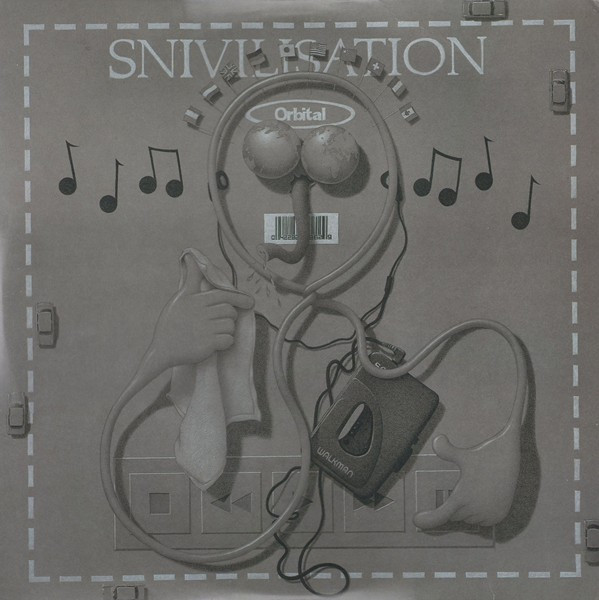
Snivilisaton is the third album from Orbital, the first of theirs I bought and probably the one I love most, with In Sides a close second.
I was familiar with Orbital already, the usual suspects as you can imagine, Chime, Lush, Halcyon and Belfast, but having read an interview in Mixmag around the time of Snivilisation’s release, I found myself becoming enthralled with their ideology more than anything else.
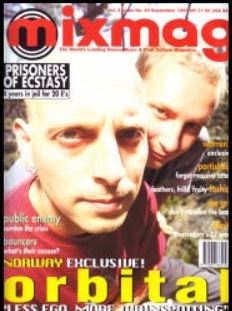
It was clear from what I was reading that Snivilisation was an album of instrumental electronic music with a message. There weren’t songs, just tracks, but every track was crafted to tell a specific story and I read about each one with growing interest.
Even the name of the album itself – a portmanteau of snivelling and civilisation – was a clear statement of intent. The album was a Cassandraic prophesy, highlighting the worrying trends that were slowly coalescing to form the future we now live in today.
Themes like the impact of colonialism and racism, our obsession with image, the growing influence of technology versus a dwindling interest in philosophy and spirituality. I was ready to buy the album before I heard a single note, and I’m so glad that I did.
Some albums are so much a part of you that you can vividly recall the day you bought them, right down to the last detail. I was about 15 at this point and had just scraped together the cash to buy the album and I wasn’t going to let anything, even mother nature, delay me a second longer than necessary.
So, soon as could, I cycled all the way to town and back in the torrential rain to fork over the money to buy it on tape. I got home drenched, peeled off my jeans, towel-dried my hair, changed clothes, put the kettle on and lit the fire.
Then when everything was set and ready – hair dry, fire glowing, sun setting, warm cuppa on the coffee table – I began the ritual and pressed play…
Cherished Forever
Forever – what an opening track this, pure melodic bliss.
So many clever twists and turns on this one, so many new compositional detours, I’m instantly hooked. Over the top of it are disjointed snippets of a speech from the movie Britannia Hospital.
There’s actually a lot of this going on in this album – weird snippets of speech from obscure sources, chopped and looped erratically – far more than any other Orbital album it has to be said. But I think that’s part of the reason why this one stands out the way it does.
Forever ends and dissolves in a deluge of rain – which matched the rain outside the first time I ever heard it and I recall that having a strange impact on me at the time – the universe was trying to tell me something.
The rain noise eventually degrades into filtered squelchy burbling for a moment and then we’re into track two, I Wish I Had Duck Feet.
10/10 for the name of this track. One of the weirdest track names ever. The story behind this piece was to highlight our obsession with self-image and physical conformity. Most of us want to be “perfect”, but maybe it’s better to be a freak.
The track starts with a loop of tribal drums while chord pads play gently in the background. Over the top we once again get disjointed loops of speech, this time an American freak show impresario giving gawkers the ole roll-up, roll-up speech. This is then interposed with time-stretched ads for a plastic surgery clinic.
The message is clear. We all want to be beautiful but at the same time we want to enjoy our base entertainments while pointing at the freaks. And thanks to modern capitalism we can now do both, as long as we’re prepared to pay the price.
Quite a prescient theme for the pre-insta era and clearly the Hartnolls could see it all coming. Course I can’t say duck feet have become the fashion yet but we sure do have a lot more duck lips these days, fuckin’ hell look at her botched lip-job – now watch the man swallow the sword, straight down the hatch without a scratch…
Sad But True starts with a nice flangy head-nodding beat while deep subbass rumbles underneath.
I think this is another perfect example of the tug-of-war that often happens between the two brothers and you can hear this happening in a lot of their tracks.
Sometimes a track will start off gently only to become more aggressive in time, other times a track will start off dark and wonky, before blossoming in layers of florid melody.
This is precisely what happens here with a steady clanging noise and piercing synth bass searing your eardrums before the arrival of an uplifting synth/vocal hybrid arpeggio, elevated further by soft synth chords and the vocals from Alison Goldfrapp.
Not sure what she’s singing, not sure if she’s singing any actual words at all, or just scat-improvising over the top. Doesn’t matter, it’s Orbital – some things just transcend words.
Crash And Carry is a straight-up 4/4 techno track, perhaps the most dancefloor-friendly tune on the album, created for the now mostly-forgotten movie Shopping. (It was Jude Law’s first role if memory serves.)
Science Friction is a more chilled number with synth jamming over the top before we get to the weirdest track on the album, Philosophy By Numbers.
Now this one always got on my nerves, but I also always knew it was supposed to. More than any other Orbital album, Snivilisation feels like a modern art installation where the medium of choice is sound, and Philosophy By Numbers is easily the best example of that.
It’s a deliberately unsettling piece, rich in discordant melodies and interspersed with samples from an ad for what, I assume, was an adult education company – so what do you want to study, technology or philosophy?
It would appear most people went for the technology because we’re drowning in the shit these days while the only philosophy that anyone seems to consume is delivered via Tiktok.
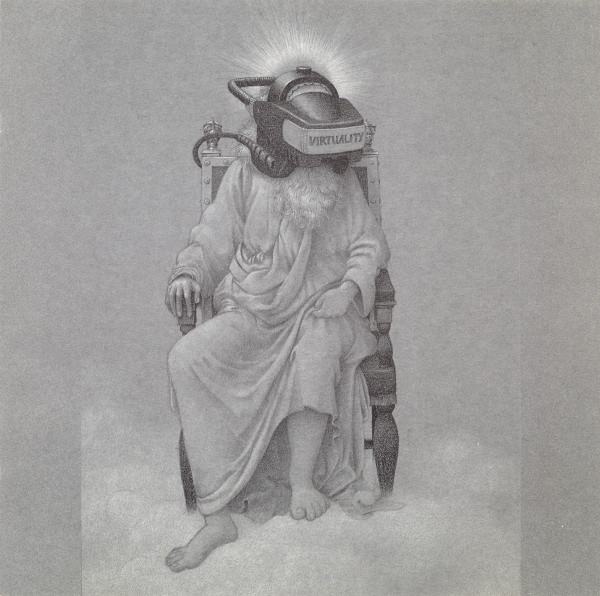
The point being, having technology without philosophy runs the risk of a second dark age.
I had this sussed already at age 15 but now, thanks to social media, it seems the whole world’s now trapped in perpetual puberty.
Not to labour the point, but we obviously shoulda studied more philosophy; “it’s about life, existence, purpose and, of course, wisdom itself.”
Kein Trink Wasser is a refreshing little piano-driven track, again taking some unexpected melodic turns. Layers of piano arpeggios all line up first, with further warmth added by string chords.
Then suddenly a change of pace, a synth bass, some drums and now the track veers off in a whole new direction as various synths frolic about for a while. When the main piano melody returns to crown it all the result is sheer joy. Such a beautiful track this one, easily one of my favourites from the Hartnolls.
It’s followed – rather unexpectedly – by Quality Seconds, a very short burst of digitally-simulated thrash metal. I remember being rather surprised by this one when I first heard it. I also vividly recall Mixmag’s scathing review of it, but I always liked this one. Besides, if you’re going to call them “the greatest band in the world”, or something along those lines, then why not allow them to rock out? They are ex-punks after all.
“Are We Here?” is another masterpiece with some incredibly skilful drum programming on display.
This track, probably more than any other on the album, reflects the philosophical ennui not just of the post-rave era but the 90s as a whole. Plus, don’t forget, either, that the X Files was probably the biggest TV show at the time, so speculation about extraterrestrial life was still very much in the mainstream.
“Are we unique, are we alone in the universe?” Not the kind of deep questions to be asking a bunch of pilled ravers, surely? (Ok, well maybe at the afterparty.)
Midway the track takes another strange turn, there’s some moody bass stabs before the beats return and, for the second time on the album, here’s Alison Goldfrapp singing about… what is she singing about?
Not sure, are they even words? Do they have meaning? Are we here? Is she here? Who knows? Who cares? Maybe we’re not alone in the universe, maybe we are, maybe there’s nobody else up there in outer space but if so, so what, because the music down here’s fucking amazing.
Next, it’s time to let those drums shine on their own for a while – almost 30 years later and they still sound incredible – then back to Alison for a bit before yet another twist.
Just when you think you have this track sussed Orbital breaks out yet another melodic surprise and it’s stunningly beautiful. An absolute masterpiece this track, again easily one of their very best.
But we’re still not done yet.
This track flutters about for a full fifteen minutes rising and falling, bright then dark, and then towards the end more weird samples ensue including one of my all-time favourites, “… long-haired, work-shy drug dealing layabout ought to be in the bloody army!”

“What does god say?”
He says shut up and let the drums play some more, or he would if he existed. Who needs god when you’ve got Orbital anyway? Honestly, this album’s as divine as it gets and has certainly helped me through my fair share of Sunday morning resurrections.
So glory be to the Paul and the Phil and the Amen breaks of Satan, forever and ever where time becomes a loop.
The final track, Attached, starts off as a slow beatless ambient track while a solitary synth fizzles over the top before getting snuggled up in some warm glowing leads.
This is then followed by some high hats and finally the reassuring boom-bap of an 808. As the track progresses various layers are added, then removed, all gradually fading in and out.
The overall is like the tide, waves of soothing sounds washing back and forth across our eardrums. I used to listen to this album a lot in my Walkman (which is fitting given the album cover) and this was the track that always helped me drift off to sleep, a perfect way to end what is still, to me, one of the most perfect albums of the 1990s.
What Does God Say?
The profound effect this album had on me was both instantaneous and enduring.
As soon as the tape finished I flipped it over and listened to it five more times before going to bed, and again on my Walkman while drifting off.
I became a lifelong fan of Orbital as a result of this album, I also caught a cold from having cycled in the rain to buy it. But it was so worth it. Not only did it open me up even more to the possibilities of electronic music, it also got me thinking about things – and when was the last time you listened to an album that actually made you think?
Alas, if anything, we’ve all become more snivlised in the 29 years since this album came out, too much technology, not enough philosophy.
Yet as I listen back to it now, feeling that same warm familiar glow, this album makes me hopeful that perhaps we’ll reach the end of the technology cycle sooner rather than later and start to open our minds, once more, to some much-needed philosophy.